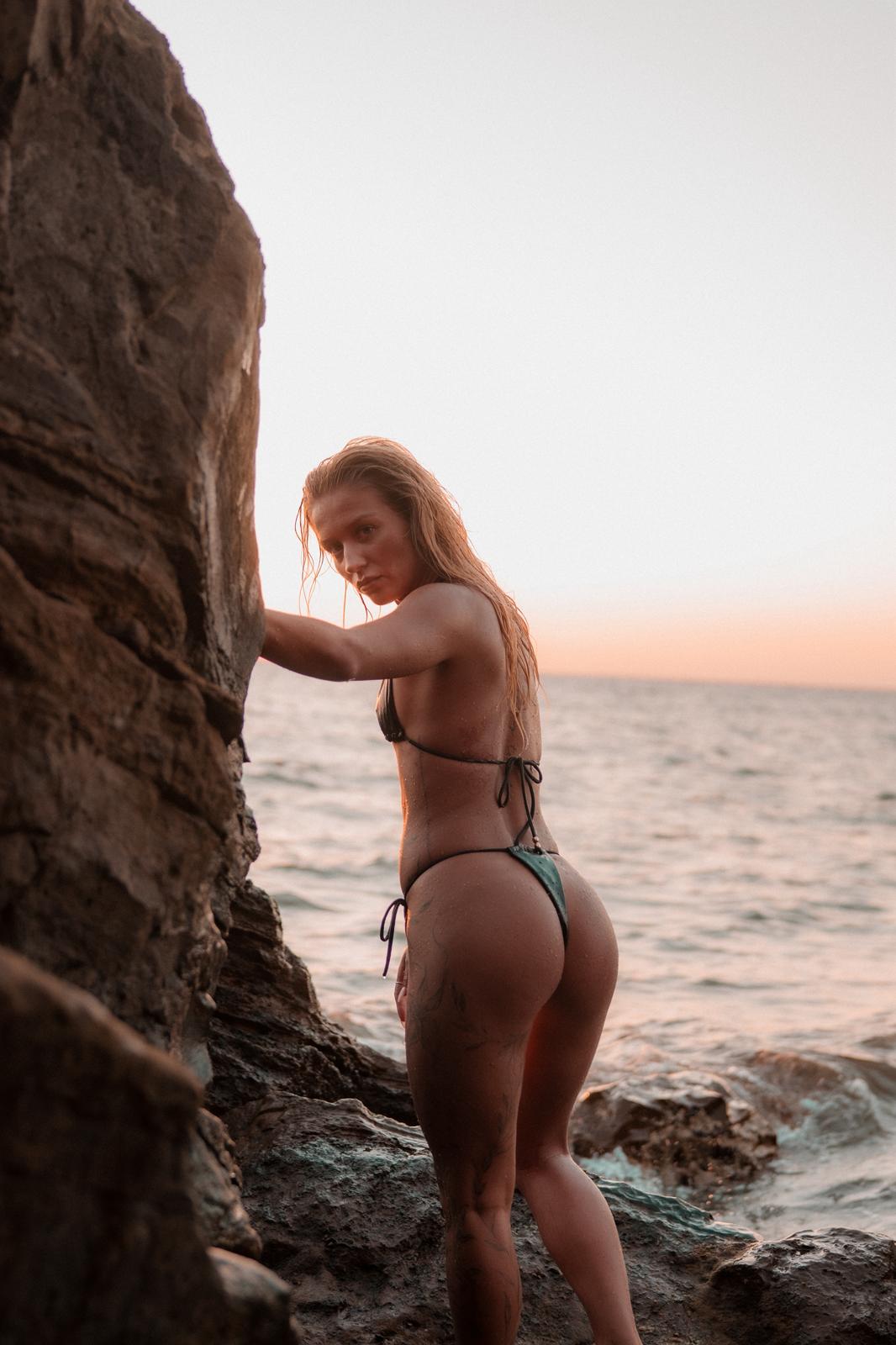
A view that takes your breath away in person often looks flat and small in a photograph. That gap is almost always composition, not equipment.
Give the eye a foreground
The most common landscape mistake is a beautiful distant subject with a big empty nothing in the bottom third. Rocks, water, flowers, a path, a person. Something close to the lens gives depth and a place for the viewer to enter the frame.
Build in layers
Strong landscapes usually have a foreground, a middle and a distance, each visually distinct. Layers are what turn a flat rectangle into somewhere you feel you could walk into. Mist and haze help enormously because they separate the layers by tone.
Use lines deliberately
Rivers, ridges, roads, fences and shorelines all lead the eye. Point them toward your subject rather than out of the frame. A diagonal creates more energy than a horizontal, and a curve feels calmer than a straight line.
Decide where the horizon sits
- Dramatic sky, put the horizon low and give the sky the frame
- Great foreground or reflection, put the horizon high
- Dead centre works only when you are deliberately going for symmetry
- Keep it level, a tilted horizon on water is immediately obvious
Scale needs a reference
Without something of known size, a huge mountain and a small hill look identical. A person, a building, a boat. One small recognisable object rescues the sense of scale in the entire image.
Simplify ruthlessly
When a landscape is not working, the answer is usually that there is too much in it. Move, zoom in, wait for the light to fall on only part of the scene. Strong images are typically about one thing, not everything visible from where you happened to stand.
Wait for the light to be interesting
The composition can be perfect and the photo still dead if the light is flat. Side light reveals texture, broken cloud creates pools of light across a valley, and the twenty minutes after sunset often beats the sunset itself. Patience is most of this job.